The Prosecutor’s Crime Analyst – An Essential Employee

Authors: PCE and Gaelin Bernstein
Read about the various essential tasks that a crime analyst can perform in a prosecutor office.

Authors: PCE and Gaelin Bernstein
Read about the various essential tasks that a crime analyst can perform in a prosecutor office.

Arizona Prosecuting Attorney’s Advisory Council (Phoenix, AZ)
The APAAC has developed a public, internet accessible database that contains names of law enforcement officers for whom there are materials which must be provided in discovery in order to comply with Brady v. Maryland and its progeny.
Read MoreYolo County District Attorney’s Office (Woodland, CA)
Created with nonprofit Measures for Justice, the Commons Data Transparency Portal aims to be transparent about the work of the Yolo County District Attorney’s Office and to influence policy.
Read MorePhiladelphia District Attorney’s Office (Philadelphia, PA)
In November of 2019, the DATA (District Attorney’s Transparency Analytics) Lab was established in the Philadelphia District Attorney’s Office with the launch of a data dashboard.
Read MoreKing County Prosecuting Attorney’s Office (King County, WA)
Utilizing the office’s Prosecutor by Karpel case management system to examine data, the King County Prosecuting Attorney’s Office published a public data dashboard using Microsoft Power BI.
Read MoreOffice of the State Attorney of the Fourth Judicial Circuit (Jacksonville, FL)
Created with Florida International University and Loyola University of Chicago, the Office of the State Attorney of the Fourth Judicial Circuit‘s data dashboard focuses on prosecutorial performance indicators (PPIs).
Read More
Author: PCE
This paper gives an overview of the current state of prosecution data, summarizes the data challenges faced by prosecutors, identifies new trends that are springing up in prosecutor offices, and poses questions for the future.

On February 3, 2022, the PCE Pop-Up focused on Data Dashboards.
Read More
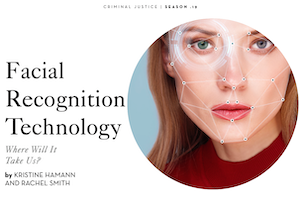
Author(s): Kristine Hamann and Rachel Smith
This paper addresses facial recognition technology used by law enforcement to enhance surveillance capabilities and the associated legal issues it raises.