Author: PCE
This publication provides a list of rules of professional conduct, ethics opinions, CLE requirements, and state statutes relevant to attorneys’ cybersecurity obligations.
At the heart of our profession is a commitment to ethical behavior. With changes in the criminal justice system and, on a larger scale, our society, we’re faced with ethical challenges regularly.

Author: PCE
This publication provides a list of rules of professional conduct, ethics opinions, CLE requirements, and state statutes relevant to attorneys’ cybersecurity obligations.
Author: NBP
This paper explores methods that can be used by prosecutor offices across the country to identify and disclose police impeachment material. Statewide efforts to standardize impeachment disclosure also are examined. The purpose of this paper is to provide general information for prosecutors considering these issues.
Author: DAASNY
“Prosecutors have more freedom than any other actor to do “the right thing.” Prosecutors find the truth, decide who should be charged, or hold the perpetrator accountable. Only prosecutors are given the freedom – and with it the ethical duty – to promote all these vital components of “the right thing.””
Author: PCE
This publication provides links to ABA Model Rules with supporting sections and comments relevant to cybersecurity.
Authors: PCE and KC Steckelberg (Prosecuting Attorneys Association of Michigan)
Read about strategies for working with the press including, ethical rules and guidelines, developing a communications strategy and special considerations for various aspects of a case.

Arizona Prosecuting Attorney’s Advisory Council (Phoenix, AZ)
The APAAC has developed a public, internet accessible database that contains names of law enforcement officers for whom there are materials which must be provided in discovery in order to comply with Brady v. Maryland and its progeny.
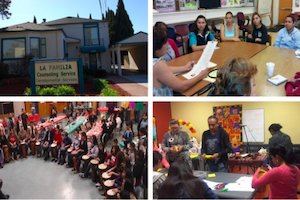
Read MorePCE Pop-Ups review current topics through presentations and breakout groups. December 8, 2021 we discussed Empowering Ethical Prosecution.
Read More
PCE has created materials on community trust, community involvement, implicit bias, and more. Watch videos from seasoned prosecutors, read our publications, and explore topics that can help your office gain trust in the community

Authors: PCE, PCE’s National Best Practices Committee (NBP)
Beyond their traditional role in the criminal justice process, many prosecutor offices provide outreach programs to raise awareness in the community about public safety issues and resources, to create stronger community partnerships, and to improve the lives of the people they serve. This paper features prosecutor initiatives that go the extra step to support local youth in various ways, most of which are not associated with a criminal case.
Author: PCE’s National Best Practices Committee (NBP)
The NBP explores the use of Community Advisory Boards for building stronger community partnerships and improving prosecutors’ role in the criminal justice process. Information is provided on how to create a Board, conduct its work, and evaluate the results.

Ramsey County Attorney’s Office, St. Paul MN
Learn how Ramsey County greatly reduced low-level equipment traffic stops and related racial disparities through a collaborative change process.

Union County Prosecutor’s Office, Elizabeth, NJ
The Union County Prosecutor’s Office partnered with local law enforcement agencies, organizations, and businesses to combat bias and hate crimes.

Office of the District Attorney, 21st Judicial District (Mesa County, CO)
The Colorado 21st Judicial District Attorney’s Office, in partnership with the local school district and Colorado Mesa University, has developed a program aimed at helping kids in potentially difficult situations before it escalates to legal trouble.
Read More
Office of the Florida State Attorney, 8th Judicial District (Gainesville, FL)
The SAO8th has partnered with Technologies for Justice to harness sentencing data from the Florida Department of Corrections in order to provide prosecutors with information about average sentences imposed for similarly situated offenders.
Read More
San Diego County District Attorney’s Office (San Diego, CA)
The San Diego County District Attorney (SDCDA) has developed a web based application that can be used from any computer or mobile device to access cultural information about various communities in San Diego County.
Read More
San Diego County District Attorney’s Office (San Diego, CA)
After evaluating calls for service, crime data, and multiple community focus groups, the San Diego County District Attorney launched a Community Action and Resource Center located in its highest need neighborhood.
Read More
Santa Clara County District Attorney’s Office (San Jose, CA)
The Santa Clara District Attorney’s Office (SCDA) has developed a way to automate the expungement of criminal records by partnering with the Court and Public Defender.
Read More
Montgomery County District Attorney’s Office (Montgomery, AL)
The Montgomery County District Attorney’s Office (MCDA) has initiated a prosecutor led job fair that brings together previously convicted people in the community with local employers.
Read MoreAuthors: PCE, New York County District Attorney’s Office, San Diego District Attorney’s Office, and Queens District Attorney’s Office
Learn ways that you can reduce bias and become a more empathetic prosecutor for victims, survivors, and witnesses.

Office of the Platte County Prosecutor, Platte County MO
The Platte County Prosecutor’s Office provides information connecting jurors with free mental health services after difficult cases.
Read More
Pennsylvania District Attorney’s Association (Harrisburg, PA)
In partnership with the Villanova law school, the Pennsylvania District Attorneys Association launched a four-part virtual briefing series on procedural justice.
Read More
Jackson County Prosecutor’s Office (Kansas City, MO)
The Jackson County Prosecutor Community Advisory Board consists of nine people of varying levels of expertise, including a person who had been wrongfully convicted.
Read More
Office of the Commonwealth’s Attorney (City of Alexandria, VA)
In the summer of 2020, the Commonwealth’s Attorney’s Office initiated plans for a community advisory board by seeking applications online from constituents.
Read MoreOn March 10, 2022, the PCE Pop-Up focused on Prosecutors Evolving Use of Community Advisory Boards.
Materials:
Morris County Prosecutor’s Office (Morris County, NJ)
The Prosecutor’s Office has teamed up with the Superior Court and the Sherriff’s Department to promote Community Connections, a collaborative program that provides wrap around services to court involved individuals.
Read MoreAuthor: PCE
Read about how prosecutors can address injustice through better collaboration with the communities they serve.
On January 11, 2021, PCE hosted a Pop-Up discussion on community engagement with presentations on connection, outreach and re-entry, creating a community advisory board, and more.
Read More
Davis County District Attorney’s Office (Farmington, UT)
The Davis County District Attorney’s Office engaged community volunteers to establish the Conviction Integrity Unit which runs independently of the office to review convictions.
Read MoreIngham County District Attorney’s Office (Lansing, MI)
In the Ingham County District Attorney’s Office, prosecutors are no longer filing cases that result from non-safety traffic stops, even where contraband may be discovered.
Read MoreAuthors: PCE and National Black Prosecutors Association
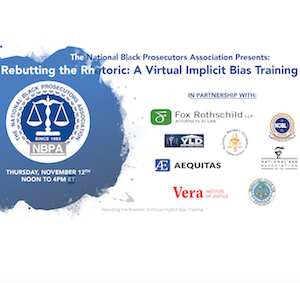
Training can help prosecutors to understand this issue and provide strategies for assuring that prosecutorial decisions are not predisposed by irrelevant implicit biases.
Read MoreOne of the many benefits of being part of the Best Practices network is the ability to share information with prosecutors across the country about promising programs and how to implement them.
Read More
Authors: PCE, NRTAC
This paper, developed by PCE’s Executive Director Kristine Hamann and St. Louis Circuit Attorney’s Office Chief of Trials Rachel Smith, addresses the critical question of how best to maximize the resources of a public forensic laboratory.
In order to help youth achieve better outcomes in life and prevent their involvement in the criminal justice system, prosecutor’s offices have engaged in commendable efforts to reduce truancy. Offices have created multi-disciplinary truancy-reduction programs at the high school and elementary school levels.
Read More
Author(s): Kristine Hamann and Rachel Smith
This paper addresses facial recognition technology used by law enforcement to enhance surveillance capabilities and the associated legal issues it raises.
The Pima County Attorney’s Office in Arizona has established a volunteer program for members of the community interested in assisting crime victims and people in crisis. The vetting and training process for victim advocate volunteers is very thorough to ensure high quality candidates are selected and are committed to long-term volunteer service. The Victim Services Division currently has close to 100 volunteers, some of whom have served for decades.
Read More
According to the National Center on Aging, approximately one in ten Americans over age 60 has experienced some form of elder abuse. Furthermore, financial exploitation of seniors costs between $2.9 billion and $36.5 billion annually.
Read More
Author(s): Kristine Hamann
As police departments across the United States embrace the use of police body-worn cameras, the cameras will inevitably capture a great deal of evidentiary material that will be useful in every type of criminal prosecution.
Author(s): Kristine Hamann and John Delaney
Fifteen seasoned violent-crime prosecutors shared their ideas about how to improve the investigation of violent crimes at a meeting sponsored by BJA and DOJ. This paper shares an overview of the meeting discussion and the approaches and challenges faced by the jurisdictions at the meeting.
Author(s): Kristine Hamann, PCE
As police departments across the United States embrace the use of police body-worn cameras (“BWCs”), it is imperative that prosecutors be involved in the uptake process as early as possible. The cameras will inevitably capture a great deal of evidentiary material that will be used in every type of criminal prosecution.
Read More